Find a trusted roofer in Elizabeth
Looking for a roofer in Elizabeth? Adelaide Roofers connects you with a local roofing contractor who works the area. A lot of Elizabeth's housing is now reaching the age where roofs need real attention rather than another patch — tell us what's going on and we'll connect you with someone who can take a look. The connection is free.
What roofs in Elizabeth are usually dealing with
Elizabeth was built largely as a South Australian Housing Trust town from the mid-1950s, so much of the suburb is original 1950s and 1960s housing — semi-detached brick and concrete-block homes, many still under their first or second roof. Because that stock is now 60-plus years old, Elizabeth sees more full re-roofing than a lot of Adelaide: tiles and old galvanised iron that have genuinely reached the end of their life, where a like-for-like restoration no longer stacks up and a tile-to-Colorbond conversion makes more sense.
Elizabeth sits in the City of Playford. Most roof work here is straightforward maintenance, but the earliest Housing Trust housing around Elizabeth South falls within a Historic Area overlay — if your home is in that pocket, changing the roof's material, colour or profile can need council approval, even though like-for-like repairs generally don't. A local roofer familiar with Playford will know when that applies.
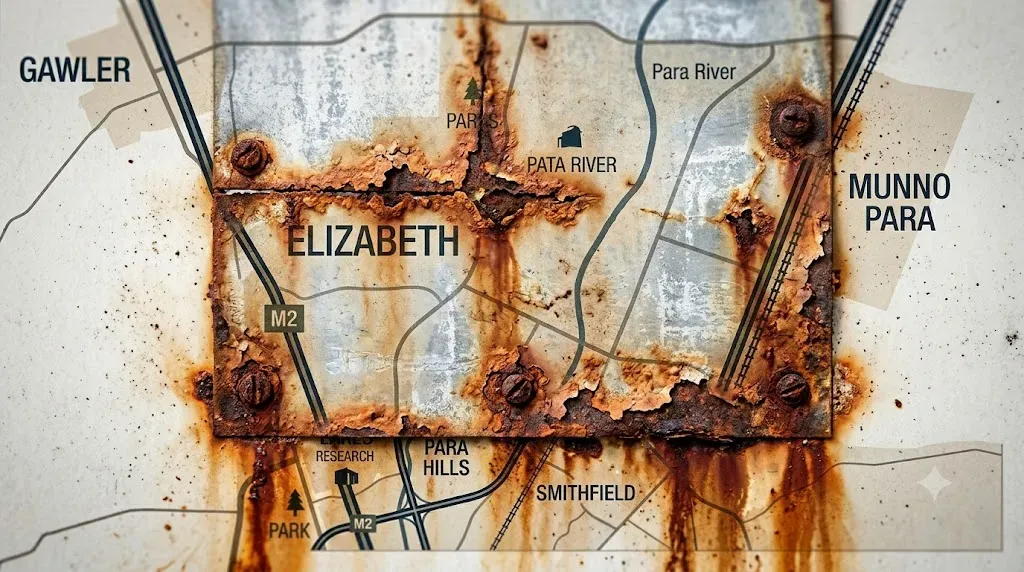
Common jobs we get asked about in Elizabeth
- Concrete tiles or old galvanised iron at the end of their life
- Rusted roof sheets and fasteners on original homes
- Cracked, crumbling ridge capping
- Persistent leaks that have been patched repeatedly
What local roofers typically handle
Tile-to-Colorbond re-roofing
Stripping worn-out tile or iron and replacing it with lightweight modern Colorbond — the common choice for Elizabeth's older homes that are past restoration.
Roof restoration
Where the tiles are still sound, cleaning, re-pointing and re-coating to get more years out of the existing roof at lower cost than replacement.
Leak detection & repair
Finding and fixing the actual source of a leak — often failed flashings, rusted iron or slipped tiles on ageing roofs.
See what your Elizabeth job actually costs, before talking to a roofer.
Enter your address, answer a few quick questions about your roof, and see how the price is built — no roofer, no obligation.
- 1
Enter your address
See your roof on satellite imagery instantly.
- 2
Answer a few quick questions
Size, material, condition — takes about a minute.
- 3
Get your report
A detailed, itemised PDF sent as a download link straight to your phone, ready to save, share, or show a roofer on the spot.
Step 1: Bring Up The Satellite Image Of Your Roof
Your roof's satellite view will appear here once you enter an address
Free, no obligation — takes about a minute.
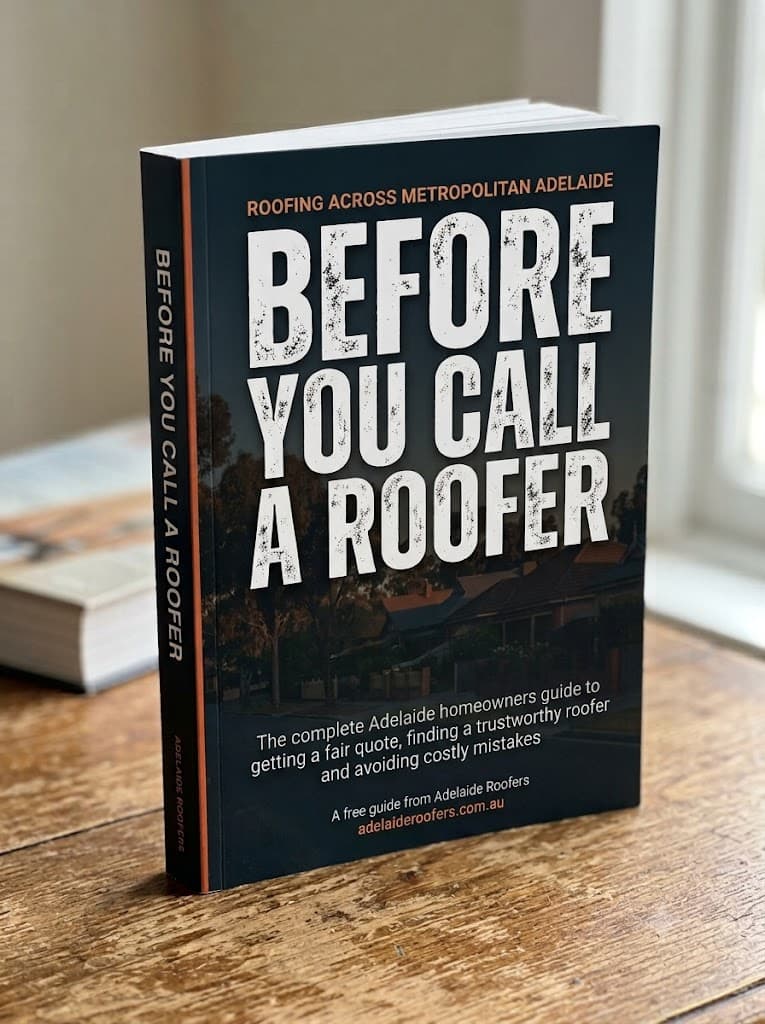
Before You Call a Roofer
Buying a new roof or restoring an existing one can cost thousands of dollars. One wrong decision can leave you paying far more than you should — or dealing with problems that surface years later.
This free guide shows Adelaide homeowners how to compare quotes with confidence, choose the right roofing contractor, and avoid the expensive mistakes that catch many people out.
Inside You'll Discover
- The three main roofing materials — their pros, cons, lifespan, and which is best for your home
- How roofing quotes are really calculated so you can spot overpriced or suspicious estimates
- What happens on installation day, from preparation through to final inspection
- Repair, restore or replace? A simple framework to help you make the right decision
- The subcontractor question that many homeowners forget to ask — and why it matters
- What your warranty actually covers, including the common mistakes that can void it
- Real Adelaide roofing price ranges for 2026, so you know what you should expect to pay
- A 60-second pre-signing checklist to review before accepting any roofing quote
No spam. No sales pressure. Just practical advice to help you make an informed decision.
Elizabeth roofing FAQs
Should I restore or re-roof an older home in Elizabeth?+
It depends on the condition of the roof, but Elizabeth's housing is old enough that full re-roofing comes up more often here than in newer suburbs. If the tiles are crumbling or the old iron is rusting through, a re-roof (often tile-to-Colorbond) is usually the better long-term spend. If the tiles are still structurally sound and it's mainly the coating and mortar that have failed, a restoration can be the smarter, cheaper option. A local roofer can tell you which applies after a look.
How much does tile-to-Colorbond re-roofing cost in Elizabeth?+
A full re-roof is a bigger job than a restoration and the price depends on roof size, pitch, the state of the timber underneath and disposal of the old material — so it has to be quoted on site. As a general guide, full re-roofs on a standard single-storey home in Adelaide commonly run into the five figures. Treat that as a ballpark only; the roofer we connect you with will price it properly after inspecting it.
Do I need council approval for roof work in Elizabeth?+
For most homes, like-for-like roof repairs, restoration and re-roofing in the same profile are treated as maintenance and generally don't need development approval from the City of Playford. The exception is the older Housing Trust housing around Elizabeth South, which sits in a Historic Area — there, changing the roof's material, colour or appearance can require approval, so it's worth checking with the council first.
Why do so many Elizabeth roofs need replacing rather than just repairing?+
It comes down to age. Much of Elizabeth was built in the 1950s and 60s, so a large share of roofs are on their original or second covering and have simply worn out — porous tiles, perished mortar, and rusting old iron. At that stage repairs stop being economical and replacement becomes the sensible fix.
Got a broader roofing question? See our full FAQ hub — cost, licensing, materials, timing and more.
Other suburbs in the northern suburbs
Ready to be matched with a vetted roofer in your area?
Tell us your suburb and what's going on with your roof, and we'll take it from there.
- Free — we're paid by the roofer, not by you
- Every roofer checked for licensing, insurance, and track record
- Matched to someone who already works your suburb
Prefer to talk it through first? Call 0433 915 802